Silver Market Review (Long Form)
Silver has always been one of the most followed precious metals due to its dual nature: a safe-haven asset like gold, and an industrial metal used in electronics, solar panels, medical tools, and batteries. This combination makes silver unique—and sometimes more volatile than gold.
1. What Makes Silver Attractive?
Silver tends to shine during periods of:
- High inflation
- Weak currency value
- Increased demand in industries
- Investor interest in safe assets
Compared to gold, silver is usually cheaper per ounce, making it more accessible for new investors and offering larger percentage gains during bull runs.
2. Industrial Demand is Growing
Modern industries rely heavily on silver:
- Solar energy and photovoltaics
- Electric vehicles (EVs)
- 5G technology
- Medical and antimicrobial uses
This industrial foundation supports the long-term demand for silver, especially as the world shifts toward renewable energy and high-tech systems.
3. Investment Options
You can invest in silver through:
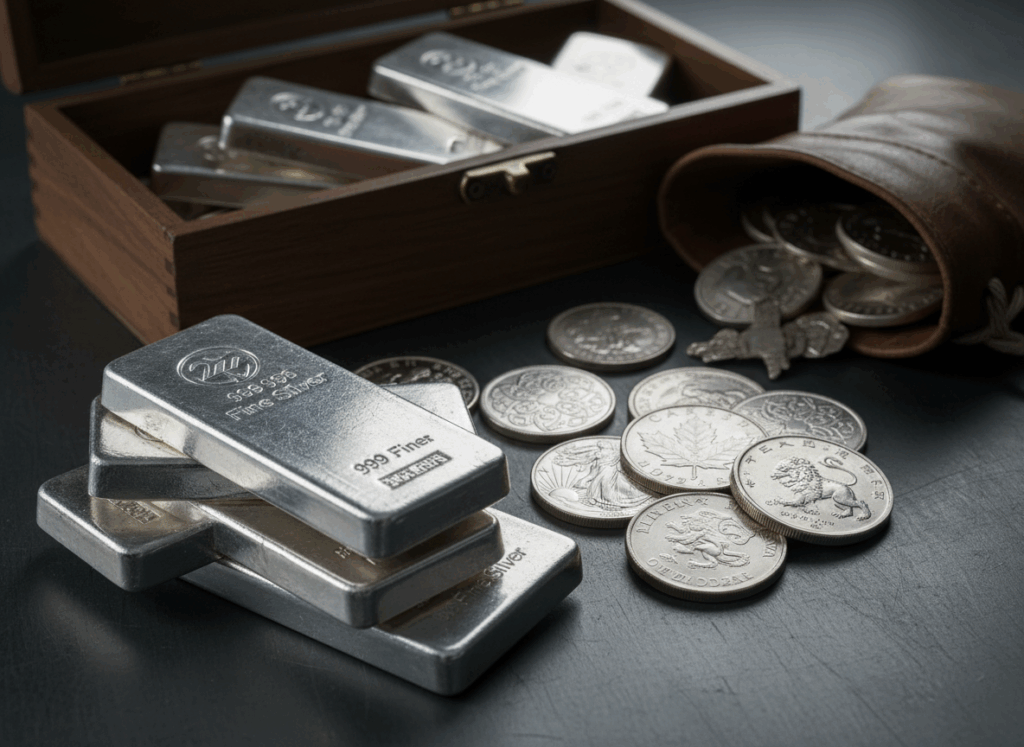
- Physical silver (bars/coins)
- ETFs
- Mining stocks
- Futures contracts
Physical silver is often preferred by long-term holders, while ETFs and stocks are used for easier, faster trading.
⚠️ Risk Alert — Be Cautious
While silver can be profitable, it carries significant risks:
High Volatility
Silver prices swing more dramatically than gold. It can rise fast but also drop sharply.
Industrial Slowdowns
If global manufacturing slows, silver demand can fall.
Market Manipulation Concerns
Because of its smaller market size compared to gold, price manipulation is more possible.
No Guaranteed Returns
Silver is not a guaranteed way to make money. Prices depend on global economic conditions, and you can lose part or all of your investment.
Always research carefully, manage your risk, and avoid investing money you cannot afford to lose. Nothing here is financial advice.