
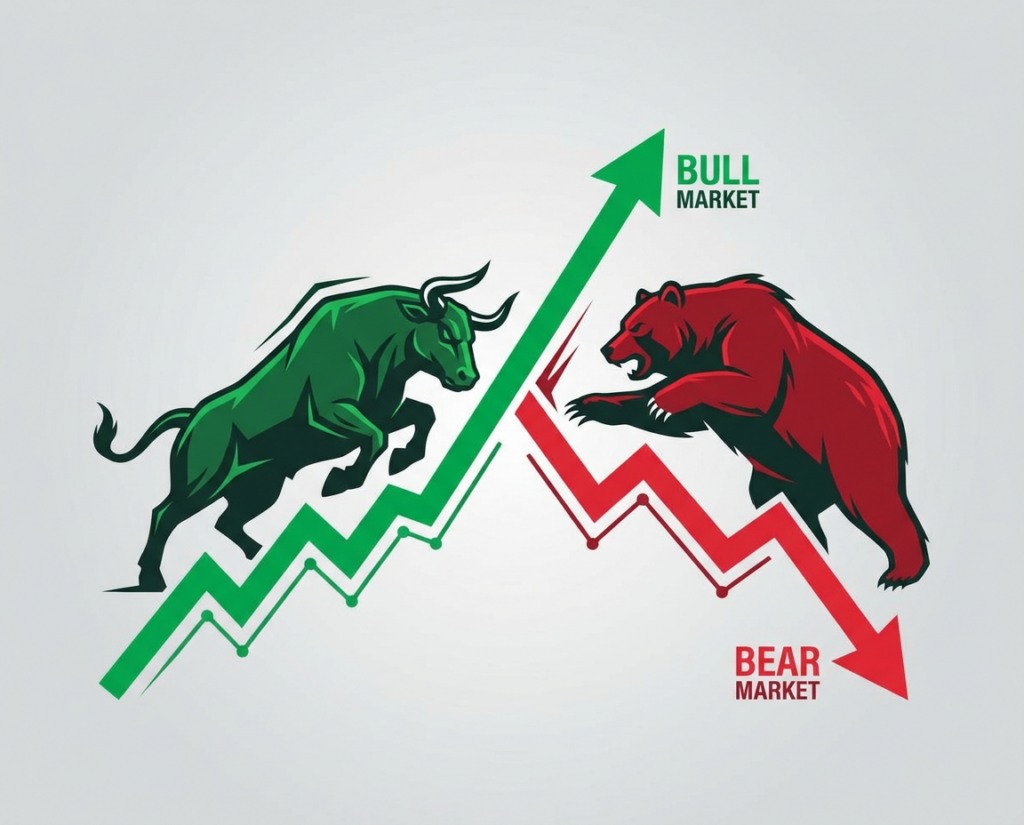
If you have ever watched the news or looked into investing, you have probably heard people talk about a “bull market” or a “bear market.” These two terms are used all the time in the world of stocks, crypto, real estate, and investing in general. But for beginners, they can sound confusing or overly complicated.
The good news is that the idea behind them is actually very simple.
A bull market means prices are generally going up.
A bear market means prices are generally going down.
That is the basic difference. But there is more to understand if you want to make smarter financial decisions and avoid panic during market changes.
In this guide, we will explain bull and bear markets in plain English, including what causes them, how investors react, and what beginners should know.
What Is a Bull Market?
A bull market is a period when prices keep rising over time. Most investors feel optimistic and confident during a bull market because they believe prices will continue to go higher.
Bull markets usually happen when:
- The economy is doing well
- Companies are making strong profits
- Employment rates are good
- Consumer confidence is high
- Investors are willing to spend and invest more
In a bull market, people are generally excited about investing. News headlines are positive, social media is full of success stories, and many investors feel confident buying stocks or other assets.
For example, if a stock market index rises steadily for months or years, that is considered a bull market.
Why Is It Called a Bull Market?
The term “bull” comes from the way a bull attacks. A bull swings its horns upward. This represents prices moving upward.
So when you hear “bull market,” think of upward movement and optimism.
Signs of a Bull Market
Here are some common signs of a bull market:
1. Prices Keep Rising
The clearest sign is consistent price growth over time. Stocks, cryptocurrencies, or other investments continue climbing higher.
2. Investors Feel Confident
People feel more comfortable investing money because they expect future gains.
3. Strong Economy
Bull markets often happen during periods of economic growth, lower unemployment, and rising business profits.
4. More Buying Than Selling
During a bull market, more people want to buy investments than sell them.
5. Positive News
Financial news tends to be optimistic. Headlines may talk about record highs, growing companies, or strong economic data.
What Is a Bear Market?
A bear market is the opposite of a bull market. It happens when prices fall significantly over a longer period of time.
Investors become nervous, fearful, or pessimistic during a bear market because they expect prices to continue falling.
Bear markets can happen because of:
- Economic slowdowns
- High inflation
- Rising interest rates
- Political uncertainty
- Financial crises
- Global events or wars
In a bear market, many people sell investments to avoid losing more money. Fear spreads quickly, and prices can drop even faster.
Why Is It Called a Bear Market?
The term “bear” comes from the way a bear attacks. A bear swipes its paws downward. This represents prices moving downward.
So when you hear “bear market,” think of falling prices and fear.
Signs of a Bear Market
1. Prices Are Falling
Markets continue dropping over weeks or months instead of recovering quickly.
2. Fear and Panic
Investors become worried about losing money. Some people sell investments in panic.
3. Weak Economy
Bear markets often happen during recessions or economic uncertainty.
4. Negative News
News headlines focus on losses, layoffs, inflation, or financial problems.
5. Less Investing Activity
People become more cautious and may avoid investing altogether.
How Much Does the Market Need to Move?
In financial markets, a common definition is:
- A bull market starts after prices rise about 20% from recent lows
- A bear market starts after prices fall about 20% from recent highs
However, everyday investors often use these terms more generally to describe the overall mood and direction of the market.
Bull Market vs. Bear Market: Simple Comparison
| Bull Market | Bear Market |
|---|---|
| Prices rise | Prices fall |
| Investors feel confident | Investors feel fearful |
| Economy is usually strong | Economy is usually weak |
| More buying | More selling |
| Positive news | Negative news |
| Optimism | Pessimism |
Do Bull and Bear Markets Happen in All Investments?
Yes. These terms are not only used for stocks.
You can have:
- A bull market in cryptocurrency
- A bear market in real estate
- A bull market in gold
- A bear market in technology stocks
Any market where prices move up or down over time can be described this way.
For example, Bitcoin has experienced both massive bull markets and painful bear markets over the years.
How Long Do Bull and Bear Markets Last?
There is no exact timeline.
Some bull markets last for years. Others may only last a few months.
Bear markets can also vary in length. Some recover quickly, while others continue for a long time.
Historically, bull markets tend to last longer than bear markets. But bear markets can feel more emotional because prices may fall very quickly.
What Should Beginners Do During a Bull Market?
Bull markets can feel exciting, but beginners should still stay careful.
Avoid Overconfidence
When prices rise constantly, people sometimes believe the market can never go down. That mindset can lead to risky decisions.
Do Research
Just because everyone is buying something does not mean it is a good investment.
Think Long-Term
Instead of chasing quick profits, focus on long-term goals and smart investing habits.
Diversify
Do not put all your money into one stock, cryptocurrency, or asset.
What Should Beginners Do During a Bear Market?
Bear markets can feel stressful, especially for new investors. But they are a normal part of investing.
Avoid Panic Selling
Selling in fear after prices have already dropped can lock in losses.
Stay Calm
Markets move in cycles. Bear markets eventually end, even though it may not feel that way at the time.
Look for Opportunities
Some experienced investors see bear markets as a chance to buy strong investments at lower prices.
Keep Learning
Bear markets often teach valuable lessons about patience, risk, and emotional control.
Why Market Psychology Matters
One of the biggest forces behind bull and bear markets is human emotion.
During bull markets, greed and excitement can push prices higher.
During bear markets, fear and panic can push prices lower.
This emotional cycle is one reason markets sometimes move more dramatically than expected.
Understanding this psychology can help investors avoid emotional decisions.
Can You Predict Bull and Bear Markets?
Many people try, but predicting markets consistently is extremely difficult.
Even professional investors often get it wrong.
Markets are influenced by many factors, including:
- Interest rates
- Inflation
- Company earnings
- Global events
- Government policies
- Investor emotions
Instead of trying to perfectly predict the market, many long-term investors focus on consistency and patience.
Final Thoughts
Bull and bear markets are simply two different phases of investing.
A bull market means prices are rising and investors feel optimistic.
A bear market means prices are falling and investors feel worried.
Both are normal parts of financial markets, and both create opportunities and risks.
For beginners, the most important thing is not to panic or become overly emotional during market changes. Learning how markets work, staying patient, and thinking long-term can help you make better decisions over time.
No market goes up forever, and no market stays down forever. Understanding bull and bear markets is one of the first important steps toward becoming a smarter and more confident investor.